
Delta-Neutral Crypto Yield in 2026: Earning Funding Without Betting on Price
How delta-neutral strategies earn yield from funding rates, what returns are realistic, where the risks are, and how to build a simple market-neutral position step by step.
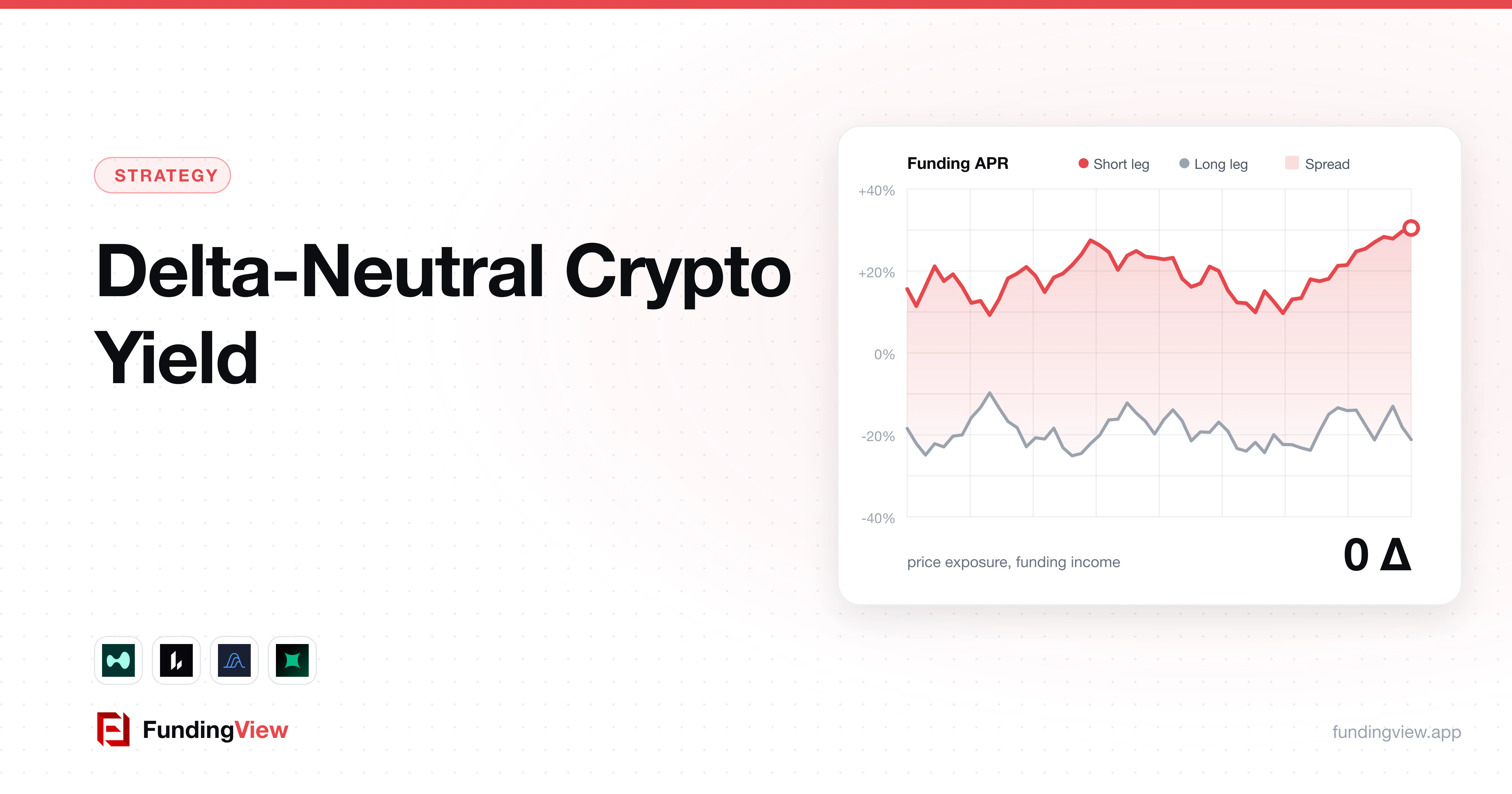
Most crypto "passive income" depends on prices going up. A delta-neutral strategy does not. You hold offsetting positions so price moves cancel out, and you earn from something else, usually funding payments.
This guide covers how it works, what returns are realistic, and the risks people underestimate.
What "delta-neutral" means
Delta is how much your position gains or loses when the price moves. A $10,000 long has a delta of +$10,000. A $10,000 short has −$10,000. Hold both and your delta is zero: a 20% move in either direction changes nothing on paper.
What is left is the funding each leg pays or receives.
The three main setups
1. Perp vs perp (funding arbitrage) Long on the venue with the lowest funding, short on the one with the highest. You earn the spread between the two rates. This uses margin on two venues and works on any listed asset, including stocks and commodities.
2. Spot vs perp (cash and carry) Buy the coin spot and short its perp. When funding is positive, the short collects it. Simple, but it only earns when funding is positive. See spot-perp funding arbitrage.
3. Points-farming hedges Open offsetting positions on two DEXs to generate volume and open interest for their points programs, while staying neutral. Funding becomes a bonus or a cost. See durable strategies for XP and airdrops.
What returns are realistic
Funding spreads move constantly. Some honest benchmarks:
- On majors like BTC and ETH, spreads between venues are often 5% to 15% APR, and they persist.
- On mid-caps, spreads of 20% to 60% APR appear regularly but last days rather than months.
- Spreads above 100% APR exist, usually on new listings or squeezes, and they rarely last.
The number that matters is the average spread over your holding period, minus fees and slippage. The backtester shows exactly that on past data, and the strategy scores on the dashboard rate how stable a spread has been.
The risks nobody puts on the landing page
- Liquidation of one leg. Delta-neutral on paper is not delta-neutral if one side gets liquidated during a wick. Use low leverage and keep extra margin on both venues.
- Funding flips. Your spread can turn negative. Monitor it and exit when it does.
- Execution cost. Opening and closing four times costs money. Short holding periods need big spreads. See execution cost and slippage.
- Venue risk. Smart contract bugs, exchange insolvency, depegs of collateral. Spread capital across venues you trust.
- Basis risk on RWAs. Stock and commodity perps can gap when markets reopen.
A 5-step starter plan
- Pick a liquid asset (BTC, ETH, SOL) and two venues you already use.
- Check the live spread on FundingView and its 30-day history.
- Open both legs with the same notional, at 2x to 3x leverage at most.
- Track the position daily. Close if the spread turns negative for more than a day or two.
- Scale only after a few weeks of results.
FAQ
Is delta-neutral yield risk-free? No. It removes price risk, not liquidation, venue or execution risk.
How much capital do I need? Fees are fixed per trade in bps, so tiny positions work. But below a few thousand dollars, gas and transfers eat a big share of the yield.
Does it work in a bear market? Yes. Funding spreads exist in every market regime. Only their direction changes.
Related: Is funding arbitrage safe? · CEX vs DEX funding arbitrage